
At 12, Kalpana Saroj was pulled out of school in a small Maharashtra village and married off. Decades later she was the chairperson of Kamani Tubes, a company many people had written off as finished. Her journey from poverty to the boardroom is often told as a miracle. The real story is more practical: small jobs, small loans, long court battles and stubborn negotiation.
Media often call her the original “Slumdog Millionaire”, a label YourStory itself called backhanded. This story looks at what she actually did.
Where she came from
Kalpana Saroj was born in 1961 in Roperkheda, in Akola district, Maharashtra, into a Dalit family. Her father was a police constable, and the family lived in police quarters. She had three sisters and two brothers.
Discrimination followed her everywhere. By her own account, neighbours told their children not to play with her, and teachers kept her apart from classmates and blocked her from school activities. She loved school anyway. In class seven she was taken out of it and married, because child marriage was the norm in her community and her father couldn’t stop it.
Married life was brutal. At twelve she was responsible for the housework of about ten people, and she says she was beaten and starved. When her father visited six months later, he was horrified and brought her home. Instead of sympathy, she met judgment: her community treated her return as a source of shame.
She tried to find her own way. She applied to a police recruitment camp, a nursing school and even the military, but was turned down because of her age or lack of education. She learned tailoring and began stitching blouses for ten rupees each. The taunts didn’t stop, and she reached the lowest point of her life. She has described coming out of it determined not to waste a second chance.
How it started
She convinced her parents to let her move to Mumbai, where she stayed with an uncle and worked full time as a tailor. When her father lost his job, she became the family’s only earner, rented a room for forty rupees a month, and brought her family to live with her. Reports also say she worked in a garment factory earning less than a dollar a month.
Then her youngest sister fell ill, and the family couldn’t afford treatment. The family lost her because of a lack of resources, and Kalpana decided she would earn a lot of money. She began working sixteen hours a day.
She took a small loan through a government scheme and started a furniture business, selling affordable versions of high-end furniture, while continuing to tailor. She also started a small NGO to spread information about government loans and schemes, so others wouldn’t have to find out the hard way.
She then bought a plot of land tied up in a legal dispute, at a low price, and spent two years in court clearing it. She brought in a partner to fund construction in exchange for a share of the profits, and a building went up. Her real estate business made her known for her contacts and her ability to get things done.
What she achieved
Kamani Tubes, a Mumbai maker of copper products founded in 1959, was in deep trouble. By her account, a 1987 Supreme Court order had handed ownership to a workers’ body, but running the company that way went badly. It was buried under about 140 court cases and roughly ₹116 crore of debt. The company had been served a liquidation notice in 2001, and its workers came to her for help.
She had no experience in the industry. She put together a core team of ten experts and took on the company’s liabilities. She also studied the debt closely and found that much of the ₹116 crore came from penalties and interest, not the original loans. She went to the finance minister and argued that lenders would recover more if the company survived than if it was liquidated. According to her account, the interest and penalties were waived and 25 per cent was cut from the principal.
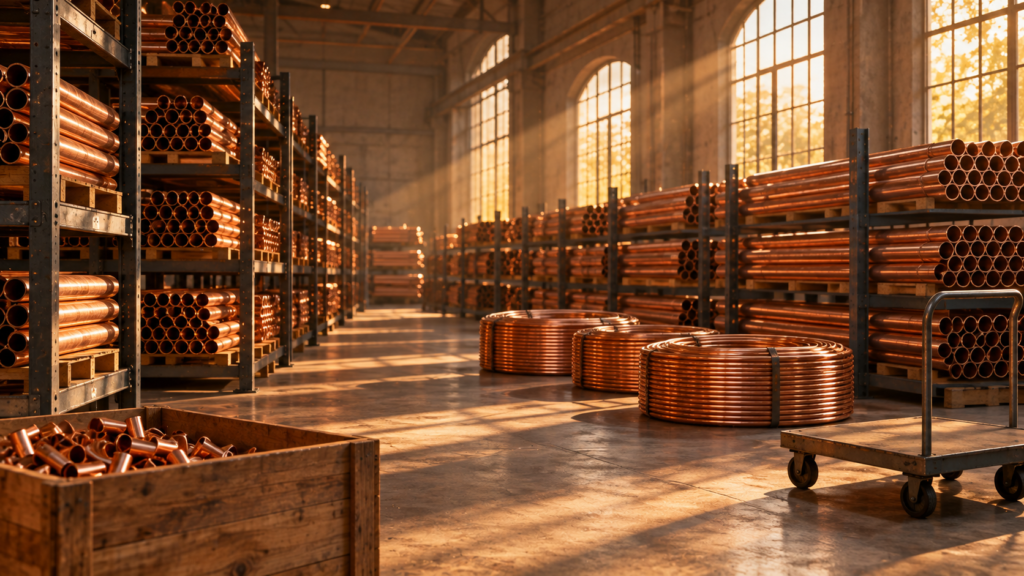
In 2006 she became chairman. She says the company repaid its bank loans within a year, though it had been given seven, and cleared the workers’ back wages in three months, though it had been given three years. In 2009 she moved the factory to Wada, outside Mumbai.
Recognition followed. She was awarded the Padma Shri in 2013 and was appointed to the board of Bharatiya Mahila Bank. She also produced a Marathi film, Khairlanjichya Mathyavar. In 2015, YourStory described her as heading a $112 million empire.
The hard part
The turnaround wasn’t quick. From 2000 to 2006, by her own account, she was mostly in and out of courts while debts and disputes were untangled. She had to act as lawyer, accountant and CEO all at once, and with no technical background, she relied on her ability to judge people to choose the right experts.
What we can learn
Start with what you have. She began with a sewing skill, a small government loan and a furniture shop, not a big idea.
Understand the numbers behind the problem. The debt looked impossible until she noticed how much of it was interest and penalties.
Build a team for what you lack. She didn’t pretend to know copper manufacturing. She recruited people who did.
Keep going through the slow years. Six years of court hearings didn’t stop her.
One key takeaway
Resilience is rarely one big comeback. It’s showing up, year after year, for slow and unglamorous work.
Conclusion
Kalpana Saroj was denied school, pushed into an early marriage and told again and again what she couldn’t do. She answered with tailoring, loans, court hearings and negotiation. Her own advice is simple: “Hard work is not overrated. It is fail proof.” Her story is a reminder that where you start shapes you, but it doesn’t have to decide where you end up.
Sources
- YourStory: Dalit child bride to $112 million CEO, the wonder story of Kalpana Saroj (2015)
- Wikipedia: Kalpana Saroj
- IUE Magazine: Inspiring Story of Mrs Kalpana Saroj
- India Herald: History Maker, Kalpana Saroj, CEO of Kamani Tubes
- Wikipedia: Ramji H. Kamani
Disclaimer: This story is based on information available in the public domain, including the sources listed above, and has been carefully researched. It is shared for information and inspiration only. Details can vary between sources and change over time. GritView is not affiliated with the people or companies mentioned. If you spot an error, please let us know and we will review it.
Comments